
The Gap Between a Camera That Sees and a System That Understands

For years, cameras have been treated as the foundation of physical security. Organizations expanded coverage, improved resolution, and increased storage capacity, believing that greater visibility would naturally lead to greater safety. Yet once incidents occur, the same question returns again and again. How was everything recorded, yet nothing truly detected in time?
The answer lies in a fundamental misunderstanding of what cameras actually provide. Seeing is not the same as understanding. The gap between a camera that sees and a system that understands has become one of the most critical weaknesses in modern security environments.
What Cameras Are Designed to Do
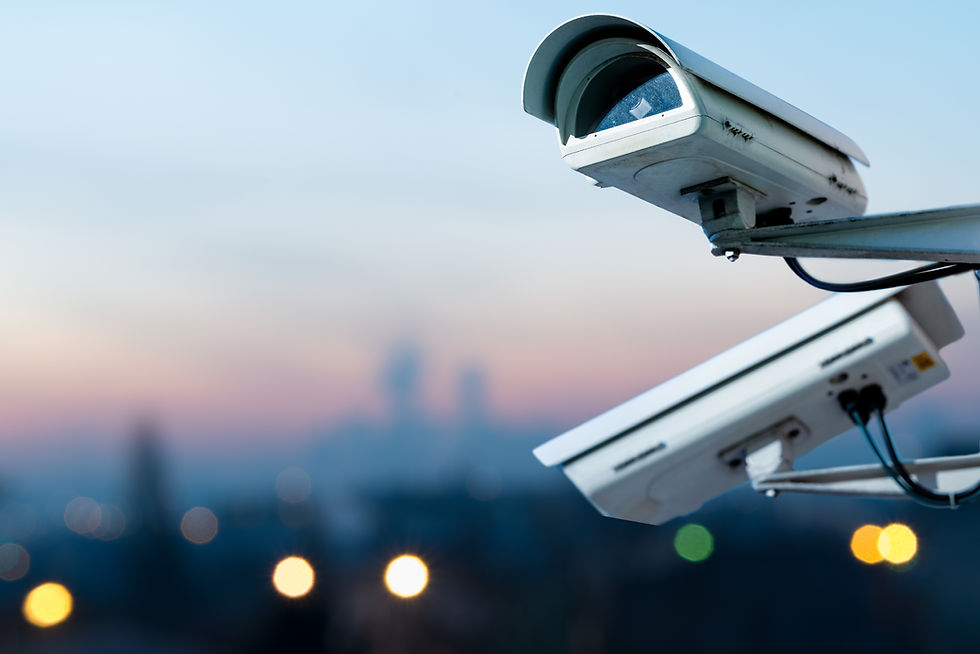
A camera is a sensory tool. Its function is to capture visual information and preserve it. Even the most advanced camera remains passive by nature. It observes scenes, movement, and changes in light, but it does not interpret meaning.
In most organizations, cameras are still used primarily for post incident review. Footage is examined after something has gone wrong to reconstruct events or identify individuals. This reactive role has value, but it does not prevent incidents, nor does it support timely intervention.
A camera can tell you what happened. It cannot tell you what matters.
Why Visibility Alone Does Not Create Security
Understanding requires context. A person standing near an entrance may be waiting, working, or testing boundaries. A vehicle slowing down near a perimeter could be lost or could be conducting reconnaissance. Cameras record these moments without distinction.
Human operators are often expected to bridge this gap by watching live feeds and making judgment calls. This approach places unrealistic demands on attention and concentration. Continuous monitoring leads to fatigue, reduced awareness, and missed cues, especially when operators are responsible for many screens at once.
When security relies on people interpreting raw video for extended periods, the system becomes fragile and inconsistent.
The Promise and Limits of Video Analytics
Video analytics were introduced to reduce dependence on constant human observation. Motion detection, intrusion alerts, and object recognition created the impression that cameras could now think.
In practice, many analytics systems fall short. Most are rule driven. They react to predefined conditions without understanding context. Movement is detected, but behavior is not evaluated. Alerts are generated without knowing whether the activity is routine or abnormal.
Over time, excessive alerts erode trust. Operators begin to ignore notifications. What was meant to improve awareness becomes noise that masks genuine risk.
Analytics that only detect conditions do not close the gap. They often deepen it.
Where AI Changes the Equation
Artificial intelligence introduces a meaningful shift when applied correctly. Instead of focusing only on events, AI driven systems analyze behavior, patterns, and context over time.
Behavioral analysis allows systems to assess how people move, not just where they move. Repeated loitering near sensitive areas, unusual movement paths, or behavior that deviates from established routines can be highlighted for attention. This does not assign intent with certainty, but it surfaces activity that deserves closer examination.
Pattern recognition extends this capability across time and space. AI can identify recurring behaviors, vehicles, or sequences that appear harmless individually but become relevant when viewed collectively. A vehicle passing the same location repeatedly at similar times, or a person appearing across multiple zones without a clear operational reason, may not trigger traditional alerts yet still represent elevated risk.
License plate recognition adds another layer of situational context, particularly in perimeter and access controlled environments. Recognizing familiar vehicles, identifying unknown ones, and correlating movement with time and location helps distinguish routine traffic from anomalies. When combined with behavioral indicators, this capability strengthens awareness without requiring constant human focus.
These capabilities do not remove uncertainty. They reduce noise. They help shift attention from everything that is visible to what is unusual and potentially meaningful.

What Understanding Actually Requires
A system that understands does more than analyze video. It evaluates behavior within context and over time. It learns what normal looks like for a specific environment and identifies deviations that matter.
Understanding depends on situational awareness rather than isolated alerts. Time of day, location, routine activity, and environmental conditions all influence interpretation. Correlating video with other inputs such as access activity or environmental data further strengthens decision making.
Without this broader perspective, systems remain reactive. They see events clearly but fail to grasp significance.
The Illusion of Coverage
One of the most common misconceptions in physical security is equating camera coverage with control. Organizations often assume that adding more cameras automatically reduces risk.
In reality, increased visibility without intelligent interpretation increases complexity. More cameras generate more data. Without prioritization and context, operators face cognitive overload. Critical signals are buried within routine activity, delaying recognition when time matters most.
The result is a false sense of security. Leadership believes risks are managed because everything is visible, while true situational awareness remains shallow.
Supporting Human Decision Making
Understanding does not replace human judgment. It supports it. Intelligent systems are meant to elevate decision making, not automate it away.
When systems provide meaningful insights rather than raw footage, operators can focus on assessment and response. They move from watching screens to managing situations. This reduces fatigue, improves reaction time, and increases confidence in alerts.
Security improves not because there is more data, but because there is better information.
Strategic Implications
The gap between seeing and understanding has strategic consequences. Organizations that invest heavily in hardware without investing in intelligence design often discover weaknesses only after an incident.
True security maturity requires different questions. Not how many cameras are installed, but how quickly abnormal behavior is recognized. Not how much footage is stored, but how effectively risk is identified in real time.
Understanding is a system level capability. It cannot be achieved through equipment alone.
Conclusion
Cameras remain essential to physical security. Visibility matters. But visibility without understanding creates blind spots at the most critical level, decision making. The Gap Between a Camera That Sees and a System That Understands is where many organizations believe they are protected, yet remain exposed in practice.
Closing this gap requires a shift in mindset. From observation to interpretation. From data collection to situational awareness. From reacting after the fact to recognizing risk as it emerges.
Security is not defined by what a system can see. It is defined by what it can understand, and how effectively it supports those responsible for protecting life, continuity, and control.
Stay Ahead of the Threat. Partner with Experts.
Eagle Point Operations works with organizations to move beyond reaction-based security and toward intelligence-driven prevention. Through threat profiling, behavioral analysis, and strategic and smart security design, we help clients identify risks early - before violence becomes reality.
If your organization is ready to rethink how it approaches active shooter threats, we invite you to start that conversation with us.


Comments